The False Sleepers: What Caffeine and Alcohol Actually Do to Your Brain at Night
Learn how caffeine and alcohol act like false sleep signals that trick your brain and disrupt nighttime recovery.
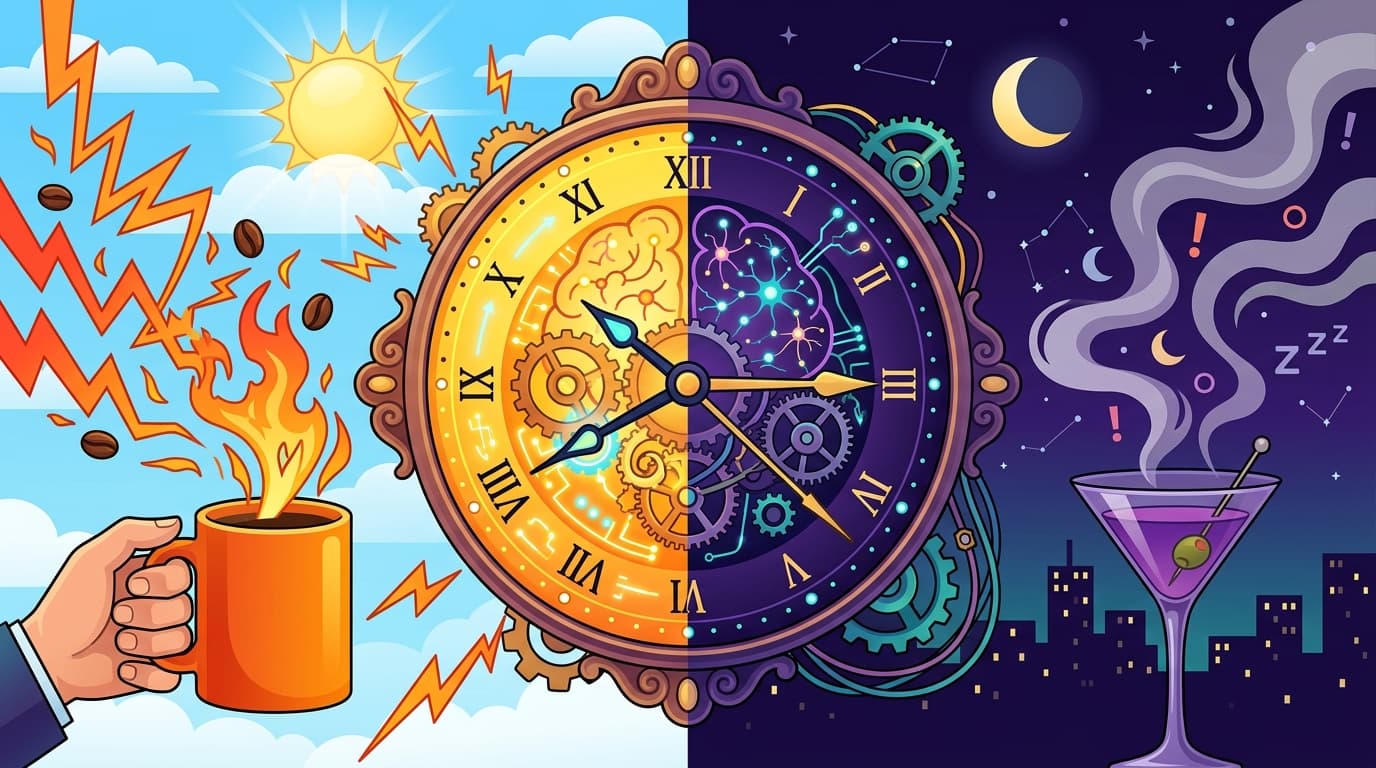
You drank coffee in the evening. You had a glass of wine before bed. You still managed to sleep for 7–8 hours.
So why do you wake up tired?
Because sleeping and restoring are not always the same thing.
Millions of people unknowingly become what sleep researchers would call “false sleepers” — people who appear asleep on the outside, but whose brains never fully enter the deep, restorative states they desperately need.
Two of the biggest culprits are surprisingly normal parts of modern life: caffeine and alcohol.
One keeps your brain artificially alert. The other sedates it into low-quality sleep.
And together, they quietly destroy recovery night after night.
Your Brain Doesn’t Just “Turn Off” During Sleep
Sleep isn’t a single state.
Your brain cycles through multiple stages throughout the night:
Light sleep Deep sleep REM sleep (dream sleep)
Each stage has a job.
Deep sleep repairs the body, restores energy, regulates hormones, and supports immune function.
REM sleep processes emotions, creativity, memory, and mental recovery.
Your brain carefully moves through these stages in cycles. But caffeine and alcohol interfere with this process in completely different ways.
The scary part?
You can still remain unconscious while your brain quality collapses underneath.
That’s why many people sleep long hours yet still wake up exhausted.
Caffeine: The “Borrowed Energy” Chemical
Caffeine doesn’t actually give you energy.
It blocks a chemical in your brain called adenosine.
Adenosine is your brain’s natural fatigue signal. It builds up throughout the day and tells your body when it’s time to rest.
Caffeine temporarily blocks those signals.
So instead of feeling tired, you feel alert.
But your brain didn’t become rested. It became numb to exhaustion.
That “boost” is often just delayed fatigue.
Why Evening Caffeine Is Worse Than Most People Think
Many people believe:
“I can drink coffee at night and still fall asleep fine.”
That’s the trap.
Falling asleep is not the same as sleeping well.
Caffeine can remain in your system for 6–10 hours depending on your genetics, metabolism, stress levels, and tolerance.
Even if you manage to sleep, caffeine can:
Reduce deep sleep Delay REM sleep Increase nighttime brain activity Cause more awakenings during the night Raise heart rate during sleep
Your brain stays in a lighter, less restorative state.
This creates a dangerous cycle:
Poor sleep quality Daytime fatigue More caffeine Worse sleep again
Over time, many people stop recognizing what real rest even feels like.
The Hidden Cost of “Sleeping Fine”
You might not notice the damage immediately.
But your brain does.
Chronic poor-quality sleep can affect:
Focus Mood stability Testosterone and hormone balance Stress resilience Appetite control Memory Muscle recovery Skin health Immune system performance
People often blame aging, stress, or “lack of motivation” when the real issue is simply broken recovery.
Your body cannot fully repair itself if your sleep architecture keeps getting disrupted.
Alcohol: The Sedation Illusion
Alcohol creates the opposite problem.
Instead of blocking tiredness, it sedates the nervous system.
That’s why alcohol can make people feel sleepy quickly.
But sedation is not natural sleep.
Alcohol suppresses brain activity in an unnatural way, especially during the first half of the night.
At first, you may fall asleep faster.
Then the problems begin.
What Alcohol Does to Your Sleep Cycle
As alcohol gets metabolized, the brain becomes unstable during the second half of sleep.
This often causes:
Frequent awakenings Increased heart rate Restlessness Poor REM sleep Night sweating Dehydration Shallow sleep
Many people don’t even remember waking up repeatedly.
They simply wake feeling “off.”
This is why alcohol-heavy nights often lead to:
Brain fog Anxiety Irritability Fatigue Poor concentration
Even after a full night in bed.
The REM Sleep Problem
One of alcohol’s biggest effects is REM suppression.
REM sleep is critical for:
Emotional processing Learning Mental clarity Creativity Cognitive performance
When REM gets disrupted repeatedly, people often notice:
Short temper Emotional instability Poor focus Increased stress sensitivity Lower motivation
Your brain loses one of its primary recovery systems.
Why Mixing Caffeine and Alcohol Is So Common
Modern culture unintentionally promotes both.
Coffee keeps people functioning through exhaustion. Alcohol helps them “switch off” at night.
So people stimulate themselves all day… then sedate themselves all evening.
The result is a nervous system that never truly resets.
The brain becomes trapped between overstimulation and artificial sedation.
And eventually, exhaustion becomes normal.
How to Protect Your Sleep Without Becoming “Perfect”
You do not need to eliminate caffeine or alcohol forever.
But timing matters massively.
Here are realistic changes that improve sleep quality dramatically:
For Caffeine Avoid caffeine 8–10 hours before bed Reduce late afternoon energy drinks Watch hidden caffeine sources like pre-workouts and sodas Don’t use caffeine to “fix” chronic sleep deprivation For Alcohol Avoid drinking close to bedtime Hydrate properly Keep alcohol occasional rather than nightly Understand that “sleepy” does not mean restorative sleep
Your goal is not perfection.
Your goal is giving your brain a real chance to recover.
The Biggest Sleep Lie
The biggest lie modern adults believe is:
“If I’m unconscious, I must be resting.”
Not necessarily.
Real sleep is biological recovery.
And when caffeine and alcohol interfere with that recovery repeatedly, your body quietly pays the price.
You may still function. You may still get through work. You may still survive the week.
But survival is not restoration.
And eventually, your brain keeps score.
Final Thoughts
Most people don’t realize how bad their sleep has become because poor sleep feels normal after enough time.
That’s what makes caffeine and alcohol so deceptive.
One disguises exhaustion. The other disguises disruption.
Together, they create millions of false sleepers — people technically asleep, but never truly recovered.
The good news?
Even small improvements in sleep quality can dramatically change:
energy, mood, focus, recovery, and long-term health.
Sometimes the most powerful productivity upgrade isn’t another stimulant.
It’s finally giving your brain real sleep again.